
Monday, October 8, 2012
Life Pre-Autism
I found this picture while I was cleaning today. It was taken about 8 1/2 years ago while my grandmother was visiting. She wanted a family picture. I tried to tell her I didn't think we could really get my kids to sit and take one, but she insisted. At that time, autism wasn't a term I knew anything about. This is life pre-autism. Not necessarily pre-autism symptoms. Just the label of autism. All the trials were there, though I had no name for them at that time.
In the background of the original pre-cropped picture you can see around the corner into my boy's room. You could see that there were toys and things laying everywhere. This was because Bubby used to disassemble his entire room everyday, several times a day. He emptied every shelf and every drawer. I would clean it up and the next day he did it again. This was my reality. I knew he was a handful. No one would watch him. Every sitter would call my husband and I before we were even finished eating while out on dates. They could not deal with his energy and his fits. He was likened to the Tasmanian Devil on Looney Toons. I would agree with that assessment at that time. I learned that I could not trust others with my high spirited little guy, because they thought he just needed some discipline. Relatives were not nice to him, as they thought him to be spoiled.
Beans is laughing and Bubby is screaming. Bubby screamed all.the.time. We have very few photos of him before the age of 5 where he wasn't screaming. Beans was pretty happy most of the time, regardless of what was going on around him. His mood was not determined by environment. As a matter of fact, as he grew I noticed that he didn't respond to much in his environment, at all.
In this moment, this was my life about 1 year pre-autism. It was a quiet kind of chaos. You can see it in my face the way I am trying to hold it together through my exhaustion. It's a bit of a sad memory for me, as I wish I could reach out to the younger me in the photo. To let myself know that my kids are different, but okay. That I was different, but okay. That I was not the failure I feared myself to be. My confidence was shaken by what I didn't know and didn't understand. I wish that I could have gotten some of the support I needed back then. That's why I try so hard to do as much for the autism community as I can. I want to help other young parents out there that are as lonely, and scared as I once was. All parents deserve a place to go where they can get the answers and support they need.


Saturday, October 6, 2012
My Blissfully Active #Asperger Brain
I have spoken before on my FB page about the inability to really feel boredom.
Let me clarify for a moment what I mean by boredom. As defined by Merriam-Webster; the state of being weary and restless through lack of interest.
This is different than the feelings I might get from say, melancholy, or restlessness that is borne of impatience (stuck waiting for something/someone for example), or discontent, which can be like restless. These moods are directly related to situations, or limited ability to do or be something else. To me, boredom is by definition, lack of interest in anything anywhere no matter what. I don't get that emotion. This was first brought to my attention while I was attending social skills therapy with my son as a follow up after diagnosis. We were working on facial expressions in a mirror. We were told to make a bored face. I couldn't. I had no background for that emotion. Bubby did, but I know from experience his 'bored' means something is too hard and he doesn't want to do it, so he announced that it's boring, or he's impatiently waiting for something. I don't think either of those really qualify as bored. The therapist insisted that I had to be bored sometimes. I said I didn't. Even when there was nothing to do physically there is always something I can think about that's interesting to keep me occupied. My mind is never dull or out of ideas. I have so many that it keeps me up at night. I have so many plans and thoughts that I am unable to do half of what I think about.
I saw this photo and I was instantly in love with it. It really resonates with my active mind and inquisitive spirit.

Let me clarify for a moment what I mean by boredom. As defined by Merriam-Webster; the state of being weary and restless through lack of interest.
This is different than the feelings I might get from say, melancholy, or restlessness that is borne of impatience (stuck waiting for something/someone for example), or discontent, which can be like restless. These moods are directly related to situations, or limited ability to do or be something else. To me, boredom is by definition, lack of interest in anything anywhere no matter what. I don't get that emotion. This was first brought to my attention while I was attending social skills therapy with my son as a follow up after diagnosis. We were working on facial expressions in a mirror. We were told to make a bored face. I couldn't. I had no background for that emotion. Bubby did, but I know from experience his 'bored' means something is too hard and he doesn't want to do it, so he announced that it's boring, or he's impatiently waiting for something. I don't think either of those really qualify as bored. The therapist insisted that I had to be bored sometimes. I said I didn't. Even when there was nothing to do physically there is always something I can think about that's interesting to keep me occupied. My mind is never dull or out of ideas. I have so many that it keeps me up at night. I have so many plans and thoughts that I am unable to do half of what I think about.
I saw this photo and I was instantly in love with it. It really resonates with my active mind and inquisitive spirit.

Thursday, October 4, 2012
The Ultimate Self Accpetance Test
Yesterday, I saw this image:
 I posted it on my FB page and to my surprise a few people responded with reservation, or flat out 'No' to the question in the image. I'm unsure of what to make of that. If you follow my blog you will have seen that I struggle with depression and it's side kick low self-esteem. It's something that has plagued me for as long as I can remember. However, I can say with certainty that I think that I am a good person. A person that is worthy of friendship and love. I think of the qualities that I think make a good companion:
*Honesty
*Kindness
*Loyalty
*Reserved (at least not overly loud and boisterous)
*Understanding of other's struggles-even if they are foreign to yourself
*Unique
*Assertive
*Generous
*Practical
*Down to earth
*Tenacious
*Dedicated
*Reliable
*Strong work ethic
Just to name a few. I think that I embody those. I actually spend a lot of time thinking about how I come across to others and whether I am putting an image out there that I can be proud of. I try to be a person that if I met myself I would want to be friends with. This is the ultimate in self-acceptance. If you can't be friends with yourself, if you can't like yourself, or hold your actions in the light of esteem, than how can others? Why would you not want to be friends with yourself? If there are specific reasons, those can be changed once you identify them. If you just feel uncomfortable with the idea, then it's time for some deep soul searching. We have to be comfortable with who we are to be truly fulfilled. That is just a given. If we can't be comfortable with our inner self, we can never be fully grounded. We risk spending a life running away from our shadow, fearing alone time.
What qualities do you think makes a good companion? Do you feel that you posses them?
*Honesty
*Kindness
*Loyalty
*Reserved (at least not overly loud and boisterous)
*Understanding of other's struggles-even if they are foreign to yourself
*Unique
*Assertive
*Generous
*Practical
*Down to earth
*Tenacious
*Dedicated
*Reliable
*Strong work ethic
Just to name a few. I think that I embody those. I actually spend a lot of time thinking about how I come across to others and whether I am putting an image out there that I can be proud of. I try to be a person that if I met myself I would want to be friends with. This is the ultimate in self-acceptance. If you can't be friends with yourself, if you can't like yourself, or hold your actions in the light of esteem, than how can others? Why would you not want to be friends with yourself? If there are specific reasons, those can be changed once you identify them. If you just feel uncomfortable with the idea, then it's time for some deep soul searching. We have to be comfortable with who we are to be truly fulfilled. That is just a given. If we can't be comfortable with our inner self, we can never be fully grounded. We risk spending a life running away from our shadow, fearing alone time.
What qualities do you think makes a good companion? Do you feel that you posses them?
Tuesday, October 2, 2012
Why Spanking Is Harmful
It seems that a week can't go by where there isn't some thread on a public page on Facebook where people are voraciously arguing over Corporal Punishment. From what I have gathered those for it are in the minority. You might not know it, based on their reactions, but I always find that to be a good indication of how valid one really think their opinion is. If I know my actions are noble I won't feel the need to get over the top defensive if someone doesn't agree with me. I don't need them to tell me I am right, or agree with me to feel validated. If I feel confident in my own decision, then I will be able to have a civil debate about why I think the way I do and be okay if I can't sway the other party to my 'side' as it were.
So, what does science say about spanking? One recent study showed a clear association with
Another states
Those are just a couple of the studies that have shown that spanking isn't beneficial to any child for any reason, for any age. I can't find one study that says it is. If you have one, please share it with me. The interesting thing to me is, even though it is not recommended by any expert that knows anything about child development, the studies say parents continue to do it anyway. This leads me to believe that we don't have enough information and know how to discipline differently. As humans we do what we know, even if it's not effective. We're creatures of habit and tradition.
My other issue with hitting kids (and make no mistake anytime you spank your child it IS by definition hitting them) is that it's illegal to hit anyone else, so why are children not afforded the same right? If your spouse, neighbor, or waiter pisses you off you aren't allowed to hit them. Even if they lie to you, steal your stuff, or otherwise do something off the wall morally wrong. You are not allowed by law to hit them unless it's to defend yourself from harm. If you do, you can be arrested for assault. So, why is it okay to hit a little defenseless person? What if you do it just enough to hurt them, and teach that neighbor of yours you mean business? Is that legal? No. So why is it legal to do it to a child. Hitting is hitting.
Before, all of you think that I am on my high horse, I will admit to using spanking a handful of times with my 2 oldest. I stopped, because it seemed not only ineffective, but it seemed to make their behavior worse. I set out to find another way.
 Different things work for different kids. All kids respond to some form of positive behavior reinforcement . Maybe, some need more redirection, frequent rewards and support than others, but they all respond to it. No matter how stubborn, ornery, or different you think your child is, I guarantee you they will respond to some sort of positive behavior plan. Everyone does. When we don't go to work our boss doesn't come over to our house and hit us. We simply pay the natural consequences of that decision. I try to mirror that as much as I can with my kids. I try to relate any punishment or reward to the actual behavior itself. If they don't do their chores, they won't get their stars on their chart, and they won't have money. The same with if we don't earn income. I don't buy them a lot of stuff. If they want toys and games, they have to earn it themselves. They don't throw fits at the store, because unless it's a special occasion they aren't expecting a toy. When I say no, I mean no. Every time, always. You throw a fit about my answer, you lose privileges. Consistently. I don't yell. I don't threaten. I state my expectation and they know I mean what I am saying, because I am consistent in following through. A lot of the time I see kids having bad behavior, because the parents reinforce it. Do you go back on previous no's, because you don't want to hear the whining? Do you let your child behave badly until you finally explode and yell, instead of getting the situation taken care of immediately? Are you inconsistent on rules? Letting them sometimes do things that are against the rules, because it's easier for you in that moment, than to exert the energy to correct them? When they fail to do something in real life, say at school, do you rush to bail them out, or do you let them handle the consequences of their own behaviors?
Conversely, when your children do something right, do you tell them? Eg; "great job making your bed, getting a good grade, helping a friend.."
Do you always stand up for them when it's warranted showing them that you have their back? Eg; The school is treating your special needs child in a way that is unfair, so you put your own feelings of shyness, busyness, ect... aside and take care of the matter.
Do you allow them times and space to be them, instead of micromanaging their time and activities? Eg; allowing them time to watch tv and be on the computer without huge time constraints, ect...
Do you allow them the individual freedom to choose, even if it's you don't agree with their decision (age appropriately, of course)? Eg; Allowing them to choose their own fashion, sports, friends, ect..
These are all examples of fostering a child's well being in a sense that allows them to feel good about themselves, and the world around them. When a child feels safe, secure and grounded they have the better tools to choose their behavior, rather than going on a series of impulsive reactions.
So, what is your preferred method of discipline? (Please note that I won't delete any comments, but I also won't respond to nasty ones, either)
And above all, please remember:
Punish the behavior, not the child!
So, what does science say about spanking? One recent study showed a clear association with
"the proportion of illnesses such as depression, anxiety, alcohol and drug abuse as well as personality disorders that may be attributable to physical punishment".
Another states
" Despite American Academy of Pediatrics recommendations to the contrary, most parents in the United States approve of and have used CP as a form of child discipline. The current findings suggest that even minor forms of CP, such as spanking, increase risk for increased child aggressive behavior. Importantly, these findings cannot be attributed to possible confounding effects of a host of other maternal parenting risk factors."
Those are just a couple of the studies that have shown that spanking isn't beneficial to any child for any reason, for any age. I can't find one study that says it is. If you have one, please share it with me. The interesting thing to me is, even though it is not recommended by any expert that knows anything about child development, the studies say parents continue to do it anyway. This leads me to believe that we don't have enough information and know how to discipline differently. As humans we do what we know, even if it's not effective. We're creatures of habit and tradition.
My other issue with hitting kids (and make no mistake anytime you spank your child it IS by definition hitting them) is that it's illegal to hit anyone else, so why are children not afforded the same right? If your spouse, neighbor, or waiter pisses you off you aren't allowed to hit them. Even if they lie to you, steal your stuff, or otherwise do something off the wall morally wrong. You are not allowed by law to hit them unless it's to defend yourself from harm. If you do, you can be arrested for assault. So, why is it okay to hit a little defenseless person? What if you do it just enough to hurt them, and teach that neighbor of yours you mean business? Is that legal? No. So why is it legal to do it to a child. Hitting is hitting.
Before, all of you think that I am on my high horse, I will admit to using spanking a handful of times with my 2 oldest. I stopped, because it seemed not only ineffective, but it seemed to make their behavior worse. I set out to find another way.
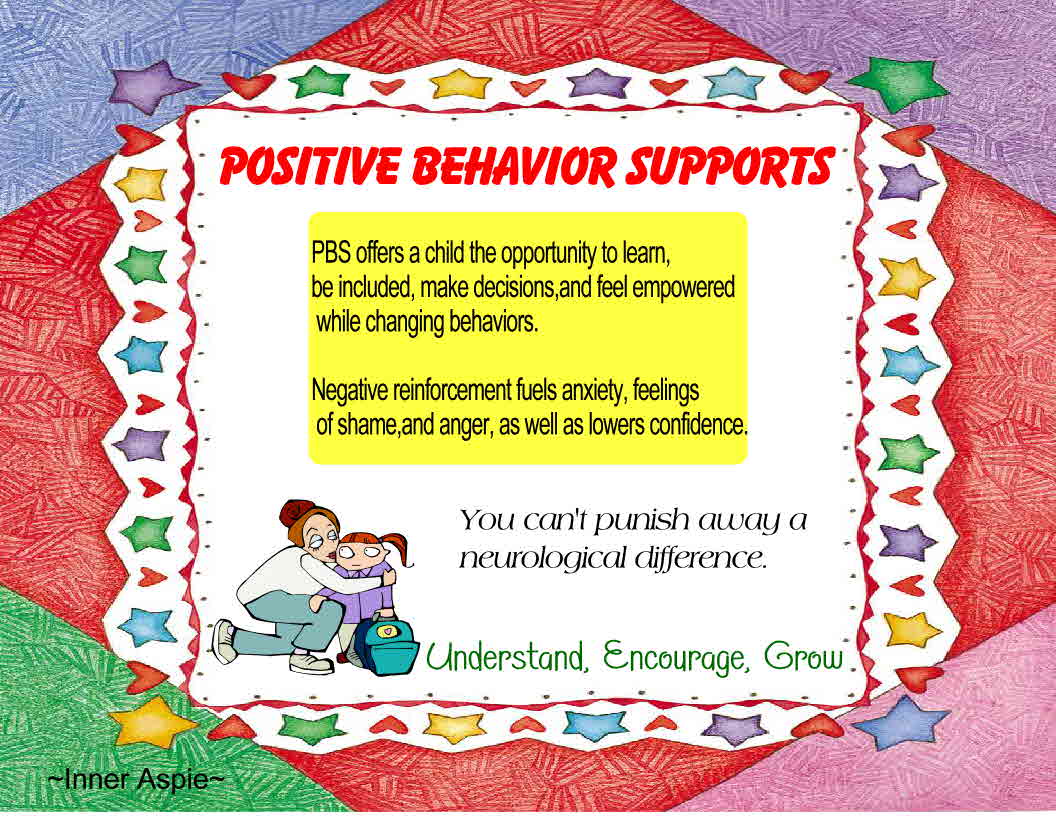 Different things work for different kids. All kids respond to some form of positive behavior reinforcement . Maybe, some need more redirection, frequent rewards and support than others, but they all respond to it. No matter how stubborn, ornery, or different you think your child is, I guarantee you they will respond to some sort of positive behavior plan. Everyone does. When we don't go to work our boss doesn't come over to our house and hit us. We simply pay the natural consequences of that decision. I try to mirror that as much as I can with my kids. I try to relate any punishment or reward to the actual behavior itself. If they don't do their chores, they won't get their stars on their chart, and they won't have money. The same with if we don't earn income. I don't buy them a lot of stuff. If they want toys and games, they have to earn it themselves. They don't throw fits at the store, because unless it's a special occasion they aren't expecting a toy. When I say no, I mean no. Every time, always. You throw a fit about my answer, you lose privileges. Consistently. I don't yell. I don't threaten. I state my expectation and they know I mean what I am saying, because I am consistent in following through. A lot of the time I see kids having bad behavior, because the parents reinforce it. Do you go back on previous no's, because you don't want to hear the whining? Do you let your child behave badly until you finally explode and yell, instead of getting the situation taken care of immediately? Are you inconsistent on rules? Letting them sometimes do things that are against the rules, because it's easier for you in that moment, than to exert the energy to correct them? When they fail to do something in real life, say at school, do you rush to bail them out, or do you let them handle the consequences of their own behaviors?
Conversely, when your children do something right, do you tell them? Eg; "great job making your bed, getting a good grade, helping a friend.."
Do you always stand up for them when it's warranted showing them that you have their back? Eg; The school is treating your special needs child in a way that is unfair, so you put your own feelings of shyness, busyness, ect... aside and take care of the matter.
Do you allow them times and space to be them, instead of micromanaging their time and activities? Eg; allowing them time to watch tv and be on the computer without huge time constraints, ect...
Do you allow them the individual freedom to choose, even if it's you don't agree with their decision (age appropriately, of course)? Eg; Allowing them to choose their own fashion, sports, friends, ect..
These are all examples of fostering a child's well being in a sense that allows them to feel good about themselves, and the world around them. When a child feels safe, secure and grounded they have the better tools to choose their behavior, rather than going on a series of impulsive reactions.
So, what is your preferred method of discipline? (Please note that I won't delete any comments, but I also won't respond to nasty ones, either)
And above all, please remember:
Punish the behavior, not the child!
Sunday, September 30, 2012
Do I Know You? ~This Aspie's Experience with Face Blindness.
I can feel him casually glancing in my direction. I make a point to look away and not make eye contact, because I don't feel like having polite conversation at the pool with strange men I don't know. Eventually, we cross paths and he asks me how I am. I can tell by his demeanor that he's not a stranger. He is someone I've met before and should be acquainted with. I search the pool to see if I recognize his children. I'm looking for any clues that can help me here, but none come. I just make small talk and try to figure it out later. It turns out to be one of my daughter's friend's parents. I've spoken to him in the last couple of weeks. I should know who he is.
The above scenario is probably something that has happened to most people before at some point, but for me (and many others on the spectrum) it happens often. There is a phenomenon called face blindness or Prosopagnosia. I am unsure if I fit the criteria for this diagnosis. I took the face blindness test of famous faces and scored 93%. That is above average. I have no trouble identifying faces of famous people, even those I have not seen in 20 some years. My memory is quite good in that way. However, when social interaction in everyday life is introduced to the scenario I seem to lose the ability to identify acquaintances.
As you can imagine, this is troublesome. If I run into someone, say at the store it is very likely that I will not recognize them. I live in a small town, so it is certain to happen often, just based on the statistics alone. So, maybe you are one of the son's paras, the secretary at the school, or the bank teller, the principal that I've sat through 10+ IEP meetings with, or my neighbors.... I will walk past you as if I've never met you, unless you make the first move. I'm certain that this doesn't help my social life, as I know that I come off as snobby. It has to be terribly confusing to others, especially the ones that I warmly chat with on a regular basis to suddenly find me oblivious to them in another environment.
I wonder if Beans has this issue, too. He always smells people upon greeting them.He reaches out and grabs your clothes, and hair and sniffs. I think he may be trying to identify who you are by your scent.
If you took the test, feel free to leave your score in the comment section, as well as any experience you may have with this issue, either with yourself, or your ASD loved one.
The above scenario is probably something that has happened to most people before at some point, but for me (and many others on the spectrum) it happens often. There is a phenomenon called face blindness or Prosopagnosia. I am unsure if I fit the criteria for this diagnosis. I took the face blindness test of famous faces and scored 93%. That is above average. I have no trouble identifying faces of famous people, even those I have not seen in 20 some years. My memory is quite good in that way. However, when social interaction in everyday life is introduced to the scenario I seem to lose the ability to identify acquaintances.
As you can imagine, this is troublesome. If I run into someone, say at the store it is very likely that I will not recognize them. I live in a small town, so it is certain to happen often, just based on the statistics alone. So, maybe you are one of the son's paras, the secretary at the school, or the bank teller, the principal that I've sat through 10+ IEP meetings with, or my neighbors.... I will walk past you as if I've never met you, unless you make the first move. I'm certain that this doesn't help my social life, as I know that I come off as snobby. It has to be terribly confusing to others, especially the ones that I warmly chat with on a regular basis to suddenly find me oblivious to them in another environment.
I wonder if Beans has this issue, too. He always smells people upon greeting them.He reaches out and grabs your clothes, and hair and sniffs. I think he may be trying to identify who you are by your scent.
If you took the test, feel free to leave your score in the comment section, as well as any experience you may have with this issue, either with yourself, or your ASD loved one.
Subscribe to:
Posts (Atom)